Fr. Christopher Etheridge, IVE
|
Is it okay to venerate someone who is not God?
Is our devotion to Our Lady of Guadalupe valid? The first principle that St. Louis-Marie Grignion de Montfort proposes in his Treatise on True Devotion to Mary is Jesus Christ. 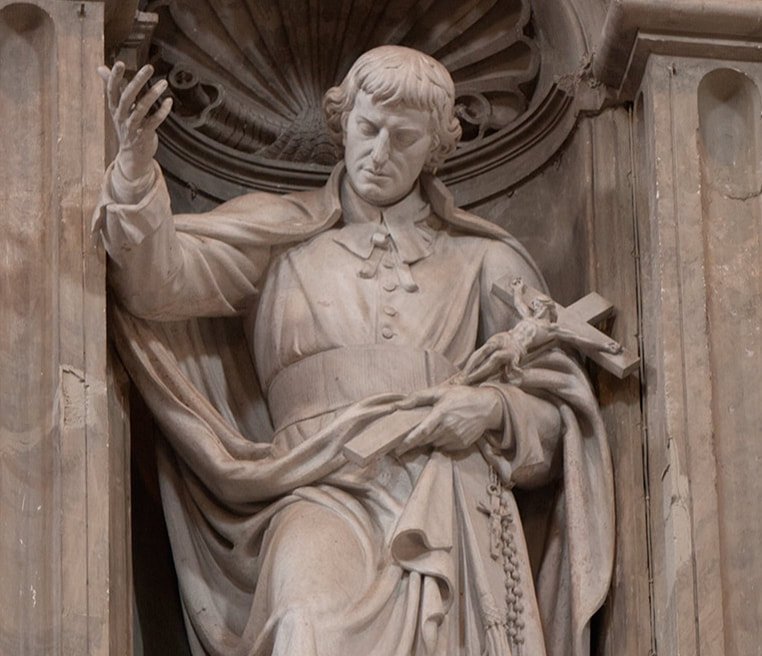
St. Louis de Montfort in the Vatican
|
He says, “Jesus, our Savior, true God and true man must be the ultimate end of all our other devotions” (True Devotion to Mary, 61)
And then he gives the reasons:
And then he gives the reasons:
- In Christ alone really dwells the fullness of divinity (Col 2:9)
- In Christ alone is the complete fulness of grace, virtue and perfection.
- In Christ alone have we been blessed with every spiritual blessing (Eph. 1:3)
- God has given us no other basis of salvation, perfection and glory than Jesus Christ
|
For this reason, as a conclusion he says “If then we are establishing sound devotion to our Blessed Lady, it is only in order to establish devotion to our Lord more perfectly, by providing a smooth but certain way of reaching Jesus Christ” (True Devotion to Mary, 62)
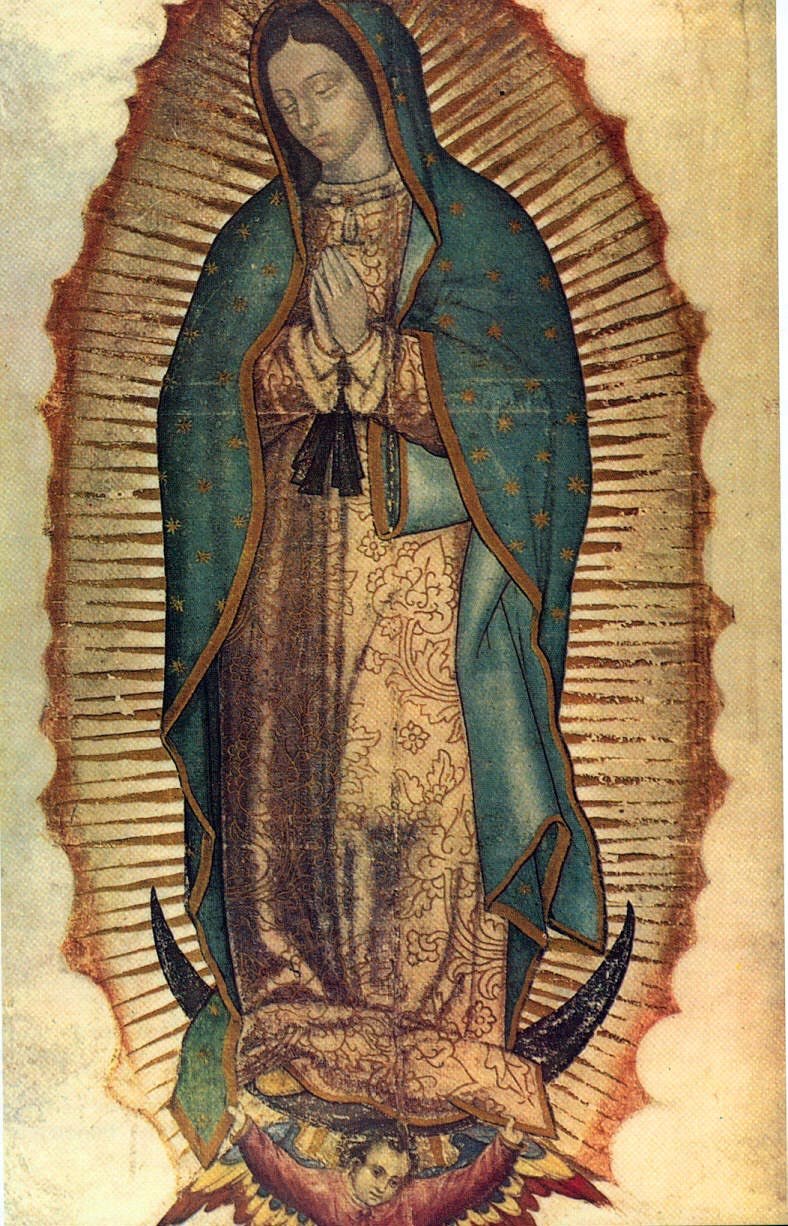
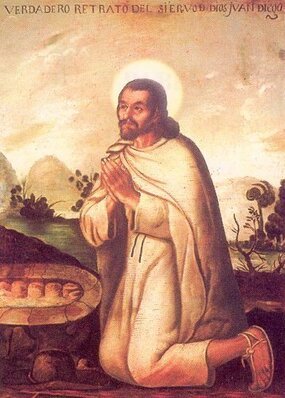
The devotion to Our Lady of Guadalupe complies perfectly with this first principle of Monfortian Mariology. This can be verified by means of the very words of the Blessed Virgin in her first apparition to St. Juan Diego: |
|
“I want very much that they build my sacred little house here in which I will show Him, I will exalt Him and make Him manifest. I will give Him to the people, He who is my Incarnate Love, He who is my Compassionate Gaze, He who in my Help, He who is my Salvation.” [2*]
Jesus, our Savior, true God and true man must be the ultimate end of all our other devotions. – St. Louis de Montfort
My Sacred Little House
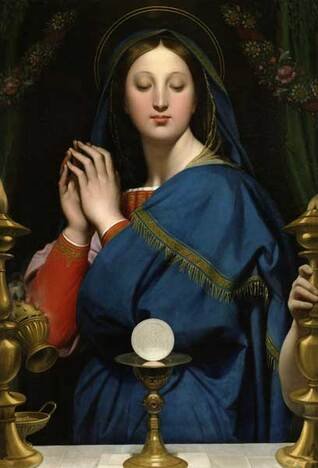
She asked for a church, but more than a Church, she asked for Catholic worship and devotion. She asked for a place for the Holy Mass, because the place of privilege where we find Jesus Christ is in the Eucharist.
Catechism of the Catholic Church 1373 “Christ Jesus, who died, yes, who was raised from the dead, who is at the right hand of God, who indeed intercedes for us,” is present in many ways to his Church:[1] in his word, in his Church’s prayer, “where two or three are gathered in my name,” (Mt. 18:20) in the poor, the sick, and the imprisoned, (cf. Mt 25:31-46) in the sacraments of which he is the author, in the sacrifice of the Mass, and in the person of the minister. But “he is present. .. most especially in the Eucharistic species.”[2]
CCC 1374 The mode of Christ’s presence under the Eucharistic species is unique. It raises the Eucharist above all the sacraments as “the perfection of the spiritual life and the end to which all the sacraments tend.”(St. Thomas, S. Th. III, 73, 3c) In the most blessed sacrament of the Eucharist “the body and blood, together with the soul and divinity, of our Lord Jesus Christ and, therefore, the whole Christ is truly, really, and substantially contained.”[3] “This presence is called ‘real’ – by which is not intended to exclude the other types of presence as if they could not be ‘real’ too, but because it is presence in the fullest sense: that is to say, it is a substantial presence by which Christ, God and man, makes himself wholly and entirely present.”[4]
Catechism of the Catholic Church 1373 “Christ Jesus, who died, yes, who was raised from the dead, who is at the right hand of God, who indeed intercedes for us,” is present in many ways to his Church:[1] in his word, in his Church’s prayer, “where two or three are gathered in my name,” (Mt. 18:20) in the poor, the sick, and the imprisoned, (cf. Mt 25:31-46) in the sacraments of which he is the author, in the sacrifice of the Mass, and in the person of the minister. But “he is present. .. most especially in the Eucharistic species.”[2]
CCC 1374 The mode of Christ’s presence under the Eucharistic species is unique. It raises the Eucharist above all the sacraments as “the perfection of the spiritual life and the end to which all the sacraments tend.”(St. Thomas, S. Th. III, 73, 3c) In the most blessed sacrament of the Eucharist “the body and blood, together with the soul and divinity, of our Lord Jesus Christ and, therefore, the whole Christ is truly, really, and substantially contained.”[3] “This presence is called ‘real’ – by which is not intended to exclude the other types of presence as if they could not be ‘real’ too, but because it is presence in the fullest sense: that is to say, it is a substantial presence by which Christ, God and man, makes himself wholly and entirely present.”[4]
…my help, He who is my Salvation
“Whoever is not united to Christ like the branch to the vine will fall, will dry up and be thrown into the fire” (cf. Jn 15:6) warns St. Louis de Montfort.
And we can also find this same truth in the event of Guadalupe. The culture of the mexica-azteca people was one of death. They lived in order to kill. They thought they had the role of feeding the gods in order to maintain life in the universe. And what the gods asked for, according to the understanding of these indigenous people, was human blood. Hence, the mexicas dedicated themselves to “guerras floridas” (religious warfare), human sacrifices, and to a culture of death.
After all, their meaning of life was based on death. It is true that they wanted to achieve a noble end – to maintain the life of the universe – but they were mistaken in their means and in their reasons.
And we can also find this same truth in the event of Guadalupe. The culture of the mexica-azteca people was one of death. They lived in order to kill. They thought they had the role of feeding the gods in order to maintain life in the universe. And what the gods asked for, according to the understanding of these indigenous people, was human blood. Hence, the mexicas dedicated themselves to “guerras floridas” (religious warfare), human sacrifices, and to a culture of death.
After all, their meaning of life was based on death. It is true that they wanted to achieve a noble end – to maintain the life of the universe – but they were mistaken in their means and in their reasons.
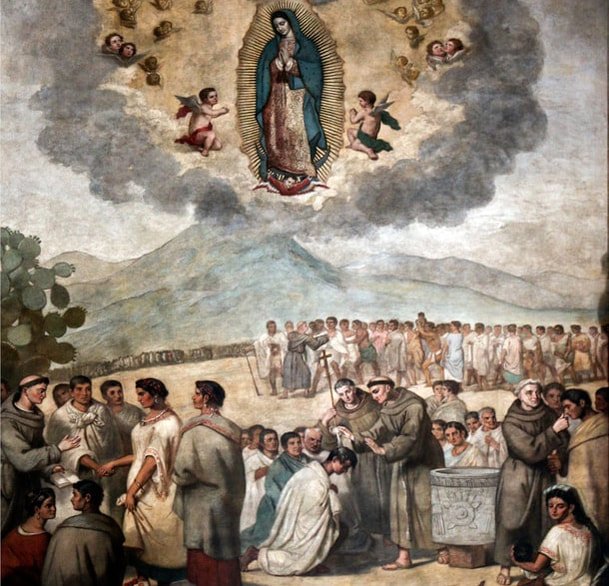
After the apparition, nearly 9 million natives were baptized in just a few years.
And why were they mistaken? Because they did not know Christ. Every person who places the meaning of their life in something that is not our Savior Jesus Christ is mistaken. As a good mother and true defender of mankind, the Virgin Mary understands this and therefore she came to bring to the indigenous people the truth of her Son, and better said of her Son…my Incarnate Love. [5*]
And our meaning of life…is it founded on Jesus Christ?
[1] Rm 8:34; cf. Lumen Gentium 48
[2*] – from the Spanish “Mucho quiero, mucho deseo, que aquí me levanten mi casita sagrada, en
donde lo mostraré, lo ensalzaré al ponerlo de manifiesto, lo entregaré a las
gentes; a Él, que es mi Amor-Persona, a Él, que es mi mirada compasiva, a Él,
que es mi auxilio, a Él, que es mi salvación.” Nican Mopohua 26-28
[2] Sacrosanctum Concilum 7
[3] Council of Trent (1551): DS 1651
[4] St. Paul VI, Mysterium Fidei 39
[5*] Amor-Persona (Personal Love or Incarnate Love)